Snake Plant Watering: How Often & How Much (Yes, You Can Kill It)
Snake plants have a reputation for being unkillable, but watering weekly rots them by spring. Discover CAM photosynthesis and the soak-and-dry method.

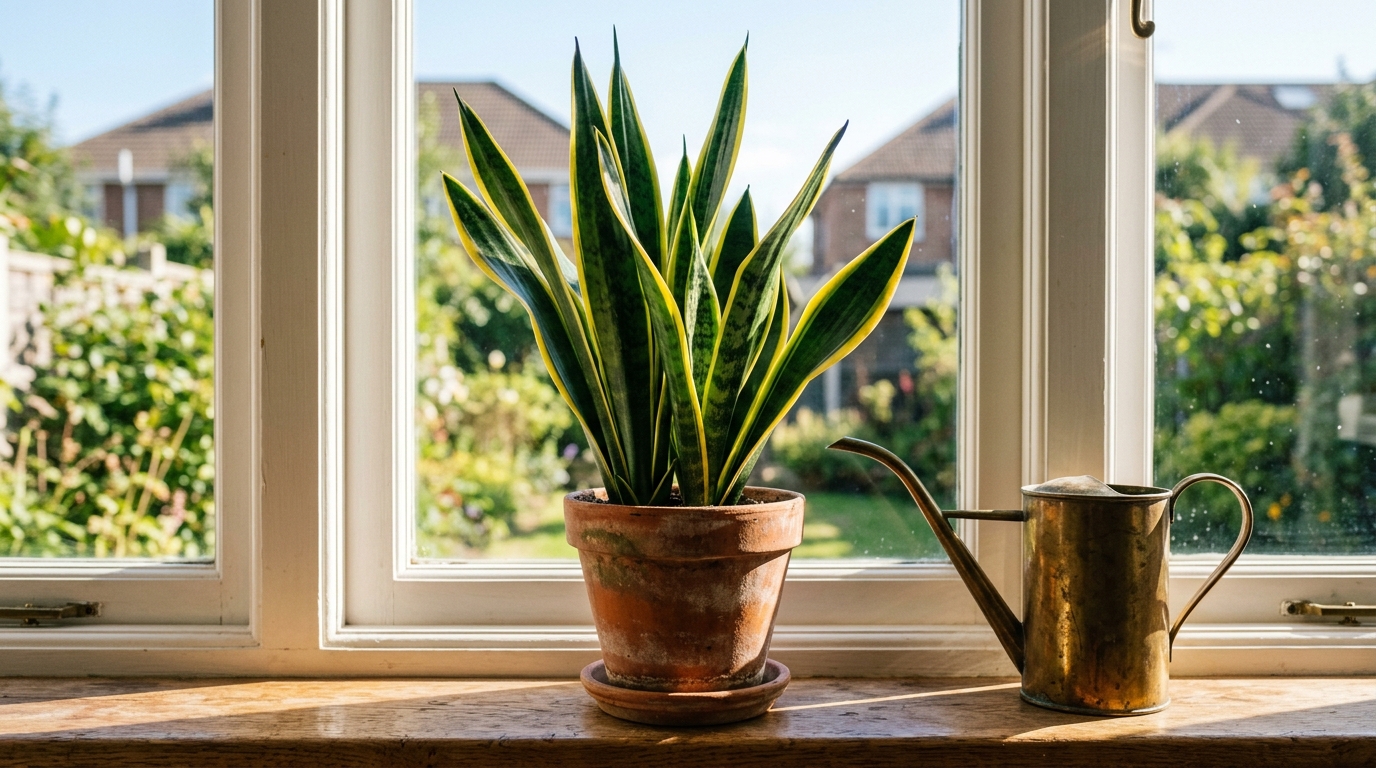

Snake plants have earned a global reputation for being completely indestructible. And then someone brings home a pristine Sansevieria, waters it every Sunday morning like a pothos, and by February the base collapses into yellow mush.
The reputation and the rot are both real. Snake plants tolerate dim rooms and months of drought better than almost any botanical on Earth, but they do not tolerate constantly damp soil.
1. The Science: CAM Photosynthesis & Arid Roots
To water a Snake Plant properly, you have to understand where it evolved. Native to the harsh arid landscapes of West Africa (from Nigeria to the Congo), Sansevieria trifasciata utilizes a specialized metabolic pathway called Crassulacean Acid Metabolism (CAM):
- •Standard tropical plants (like Monsteras) open their stomatal leaf pores during daylight hours to take in carbon dioxide, losing valuable moisture to transpiration.
- •Snake Plants do the exact opposite: They keep their stomata tightly sealed during blazing hot daylight hours. They only open their pores at night to take in CO2 when air temperatures drop.
- •As a result, water loss is nearly zero. Their thick rhizomatous underground stems and succulent sword-shaped blades are physiological water tanks designed to survive for months without rain.
When a Snake Plant sits in damp peat, its roots suffocate quickly, cutting off oxygen and fostering rot fungi. Contrast this with rainforest aroids using our [Monstera Watering Guide](/blog/how-often-to-water-a-monstera-schedule-by-season).
2. The Baseline Schedule by Environment
| Room Environment | Spring & Summer Cadence | Winter Semi-Dormancy Cadence | Moisture Check Rule |
|---|---|---|---|
| Bright Sunny Window (East/South) | Every 2 – 3 Weeks | Every 4 – 5 Weeks | Soil 100% dry all the way down |
| Medium Indirect Light (Living Room) | Every 3 – 4 Weeks | Every 5 – 6 Weeks | Insert skewer; zero dampness |
| Low-Light / Fluorescent Office | Every 4 – 6 Weeks | Every 6 – 8+ Weeks | Wait until leaves soften slightly |
3. What Overwatering Looks Like (Before It's Too Late)
Because Snake Plants store water in their rhizomes, overwatering damage starts underground weeks before leaves exhibit distress:
4. How to Rescue an Overwatered Snake Plant
5. Soil & Pots: Gritty Substrate & Drainage
- •Pot Material: Porous unglazed terracotta (like our [Fluted Terracotta Planter](/shop/fluted-terracotta-planter)) is the gold standard for succulents because clay breathes and evaporates excess moisture through its walls.
- •Substrate Mix: Never use dense potting soil alone. Blend 50% potting mix with 50% coarse perlite, pumice, and horticultural grit. Formulate exact volumes with our [Potting Soil Recipe Calculator](/tools/potting-soil-recipe-calculator).
- •Toxicity Note: Snake plants contain saponins that cause mild gastrointestinal upset in cats and dogs, as detailed in our [Pet-Safety Guide](/blog/are-monstera-toxic-to-cats-and-dogs-pet-safety-guide).
Frequently Asked Questions
How often should you water a snake plant indoors?
Every 2 to 4 weeks during spring and summer, and every 4 to 6 weeks in winter. Always ensure the potting mix is 100% dry from top to bottom before watering.
Do snake plants need sunlight?
Snake plants tolerate dim, windowless rooms better than almost any other plant, but they thrive and grow fastest in bright, indirect sunlight or mild morning sun.
Sources & Citations
- •University of Florida IFAS Extension: Environmental Horticulture on Sansevieria production.
- •Missouri Botanical Garden: Dracaena trifasciata cultural profiles.
Frequently Asked Questions
Q: How often should I water my snake plant indoors?
Start at every two to four weeks and let the soil be your guide. Fully dry all the way through means water. Anything cool or damp at two knuckles deep means check again in a few days.
Q: What does an overwatered snake plant look like?
Mushy, brown, or soft base; lower leaves going yellow and floppy; sometimes a leaf pulling away from the soil line with a rotten end.
Shop Botanicals Mentioned in This Story
Bring the living plants and tools from this article straight into your home.


More from The Journal
View All Stories →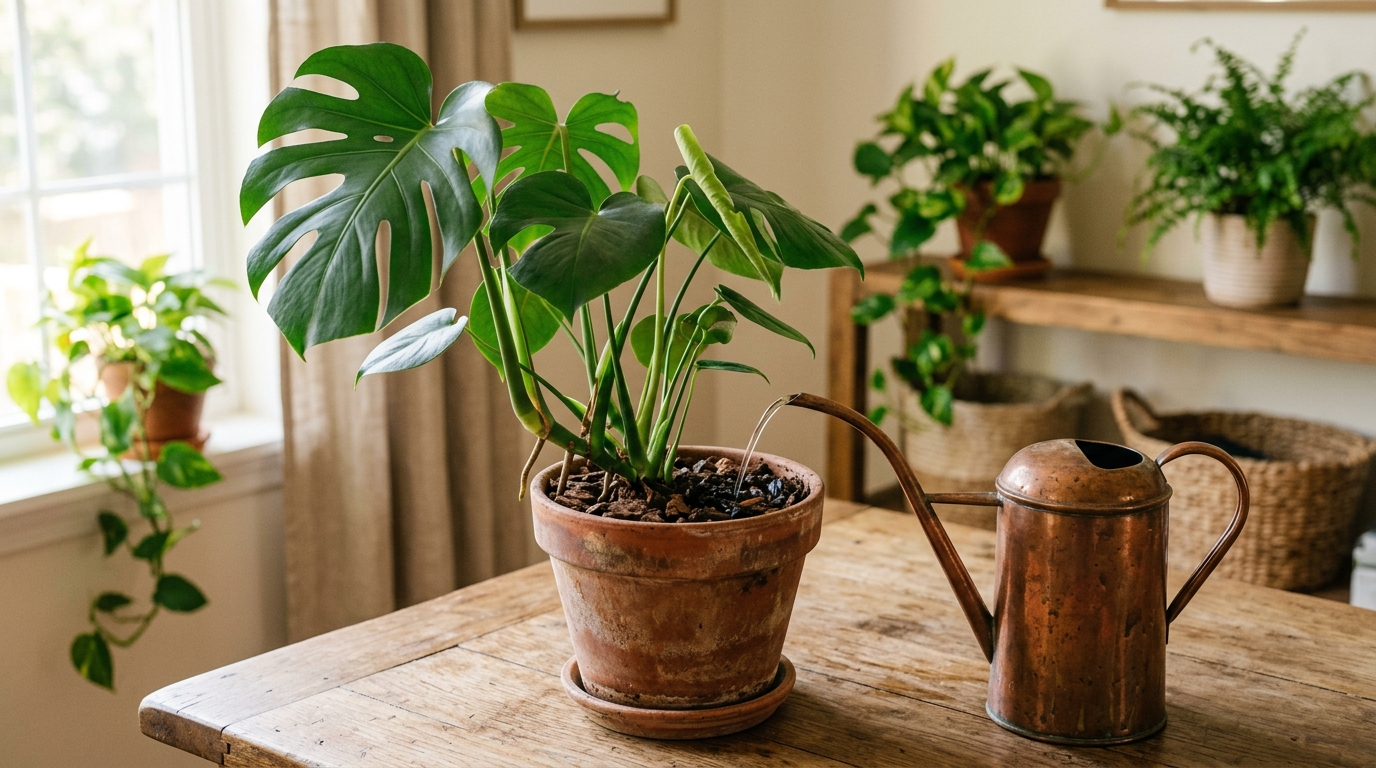
How Often to Water a Monstera (Schedule by Season)
Stop guessing on a rigid calendar. Discover how light, pot material, and seasonal growth cycles dictate your Monstera’s exact hydration needs—with a printable cheat-sheet.
Elena Vance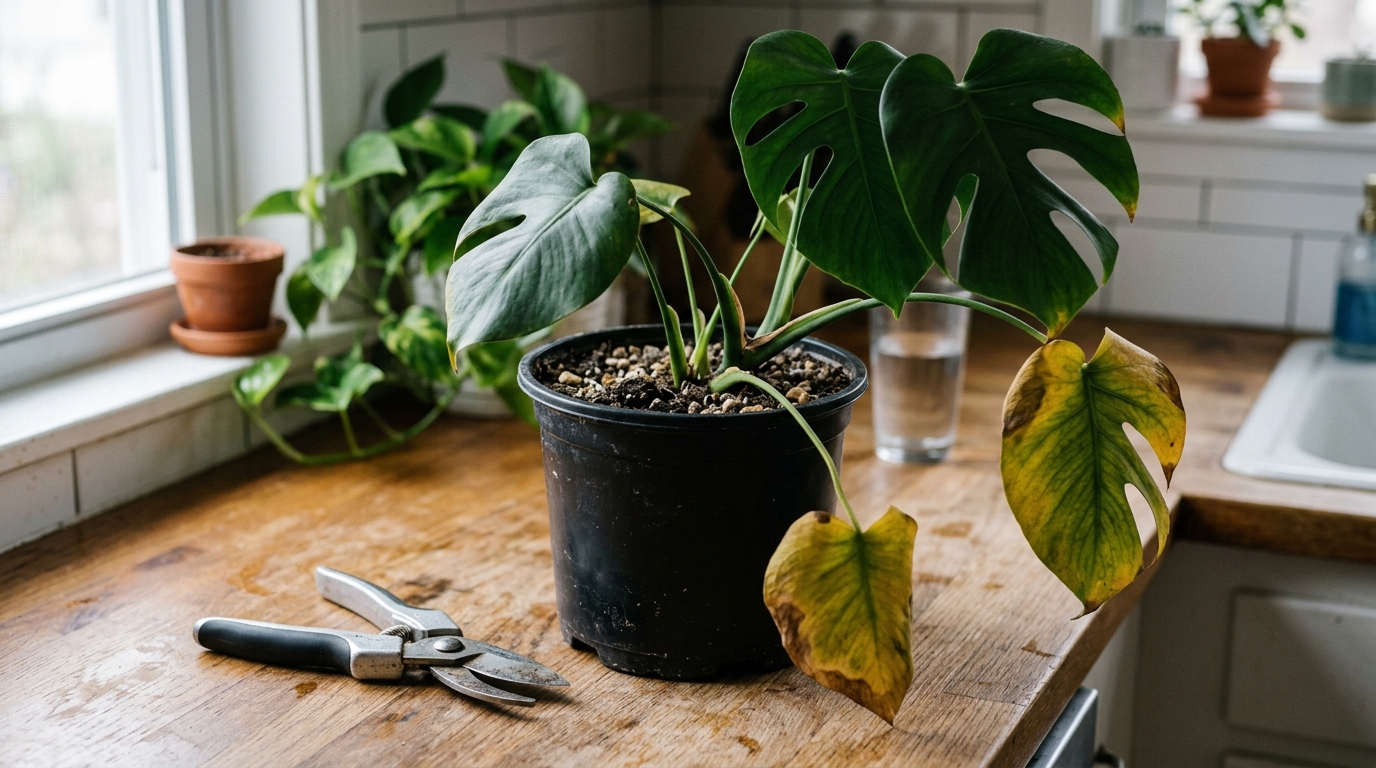
Why Is My Monstera Dying? 7 Fixes for Yellow Leaves, Root Rot & Drooping
Do not panic when your prized Monstera develops yellow leaves or limp stems. Follow our emergency triage protocol to diagnose root rot, shock, or pests—and nurse it back to life.
Elena Vance