Why Is My Monstera Dying? 7 Fixes for Yellow Leaves, Root Rot & Drooping
Do not panic when your prized Monstera develops yellow leaves or limp stems. Follow our emergency triage protocol to diagnose root rot, shock, or pests—and nurse it back to life.

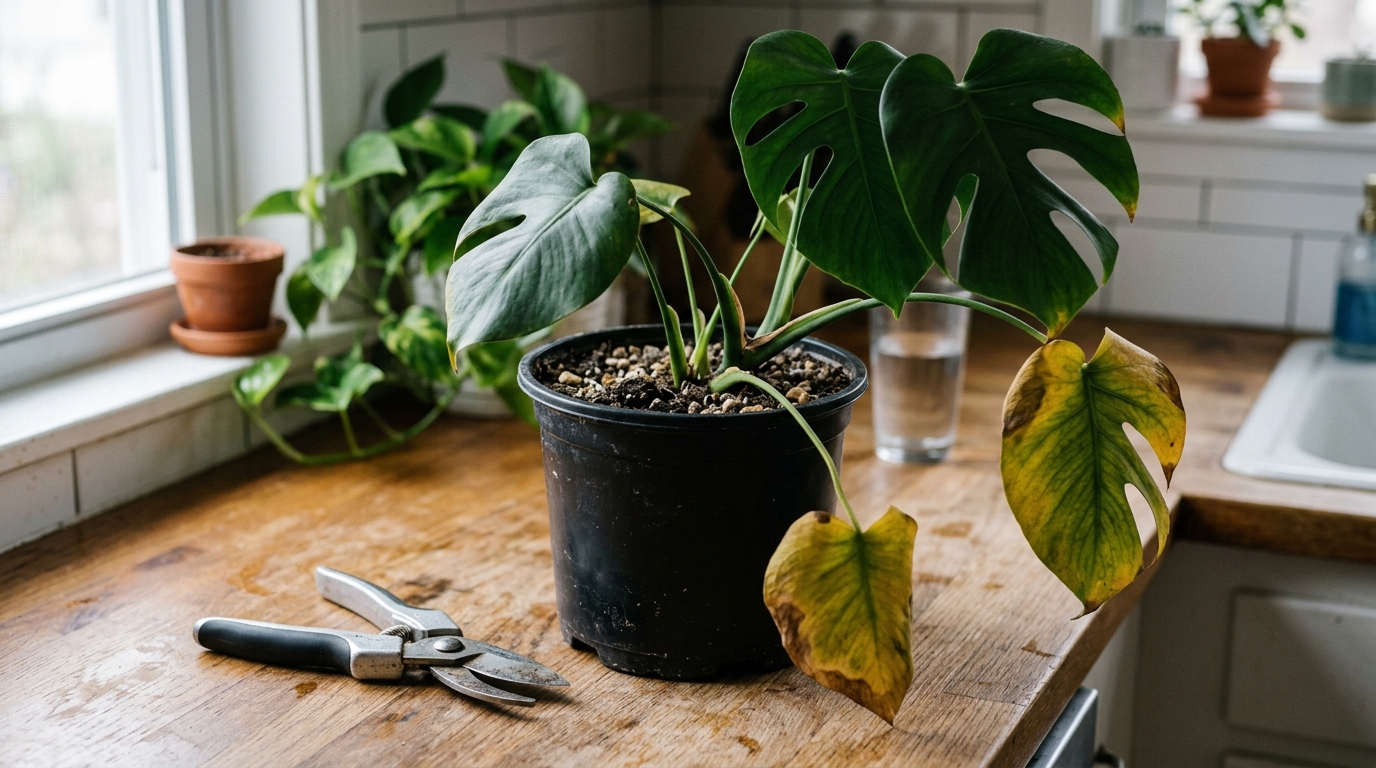

Deep breath. A Monstera with yellow leaves is rarely a plant that is actively "dying." It is a plant complaining, and Monsteras complain loudly long before cellular damage becomes terminal.
The secret lies in reading the diagnostic pattern. Below is the exact triage protocol we use at Ferny's when customers bring in distressed leaves:
Step 1: Read the Yellowing Pattern
Before touching your shears, answer three fundamental questions:
Watering issues account for over 80% of Monstera distress calls. Check your baseline against our [Seasonal Monstera Watering Guide](/blog/how-often-to-water-a-monstera-schedule-by-season).
The 7 Common Culprits & Evidence-Based Fixes
1. Overwatering (The #1 Offender)
- •Signs: Lower leaves yellowing first, feeling soft and limp rather than crisp; soil staying wet for over 10 days; musty odor; drooping foliage that does not perk up after watering.
- •The Fix: Stop watering immediately. Allow the top 50% of the container to dry out. Move the plant into brighter indirect light and improve room airflow. Run our free [Houseplant Problem Diagnoser](/tools/houseplant-problem-diagnoser) for a personalized probability breakdown.
2. Root Rot (Overwatering's Evil Final Form)
- •Signs: Rapidly spreading yellowing across multiple stems; dark brown or black mushy tissue at the base of the petioles; sour swampy soil smell; roots that pull away brown and slimy instead of firm and white.
- •The Step-by-Step Rescue:
- •If Roots Are Completely Gone: Cut the healthy top vine above the rot. Ensure your cutting includes at least one healthy node and follow our [Monstera Propagation Guide](/blog/how-to-propagate-monstera-water-and-soil-step-by-step) to root new water roots.
3. Underwatering
- •Signs: Foliage feeling papery, brittle, and limp; leaf margins crisped brown; soil shrunk and detached from the pot rim; older leaves yellowing in a dry, crunchy fashion.
- •The Fix: Give the plant a thorough 30-minute bottom-soaking bath in a sink or tray of room-temperature water until the peat re-expands.
4. Light Stress (Starvation vs Sun Scorch)
- •Too Little Light: Slow growth, small leaves with zero fenestrations, pale yellow chlorosis.
- •Too Much Direct Sun: Bleached, scorched white and crispy brown patches on the upper foliage facing the window.
- •The Fix: Position your plant 3 to 5 feet away from an unobstructed East or South window. Check your foot-candles with our [Houseplant Light Calculator](/tools/houseplant-light-calculator).
5. Pests (Spider Mites, Thrips & Scale)
- •Signs: Fine stippled yellow speckles across the leaf surface; delicate silky webbing in the leaf vein axils (spider mites); tiny black rice-shaped insects (thrips); or sticky honeydew droplets.
- •The Fix: Wipe leaves with a microfiber cloth dampened with organic neem oil or insecticidal soap. Repeat every 7 days for 4 weeks to interrupt the hatching cycle.
6. Nutrient Deficiency vs Fertilizer Burn
- •Deficiency: Uniform pale yellowing across older foliage due to nitrogen depletion.
- •Fertilizer Burn: Brown crispy leaf tips accompanied by a crusty white mineral salt buildup on the pot rim.
- •The Fix: Flush the pot with plain water to clear salt buildup, then feed monthly during spring/summer with our [Organic Plant Food Elixir](/shop/fernies-organic-kelp-elixir).
7. Transplant Shock & Unstable Stems
- •Signs: Sudden wilting or yellowing within 14 days of repotting.
- •The Fix: Avoid fertilizing or moving the plant. If heavy top growth is leaning and tearing root hairs, install a support as detailed in our [Monstera Moss Pole Guide](/blog/how-to-use-monstera-moss-pole-guide).
Should You Cut Off Yellow Leaves?
Yes, if the leaf is more than 50% yellow. A fully yellow leaf has lost its chlorophyll and can no longer photosynthesize. The plant expends metabolic energy maintaining dying vascular tissue. Prune it cleanly at the base of the petiole using sterile shears.
However, if a leaf is only 10% yellow with small blemishes, leave it intact—the green portion is still generating sugars for root recovery!
The Honest Truth: When is a Monstera Beyond Saving?
If the main stem is black, mushy, and hollow all the way to the growth tip, and every root has decayed with zero viable meristematic nodes remaining, the kindest thing is to compost the plant. Do not nurse a rotted stump for six months hoping for a miracle. Save your energy and start fresh with a healthy, greenhouse-direct [Monstera Deliciosa](/shop/monstera-deliciosa).
Frequently Asked Questions
Can a Monstera recover from severe root rot?
Yes, as long as at least 20–30% of the root system remains firm and white. After pruning rotted roots and repotting in sterile chunky aroid soil, expect a quiet 3–4 week recovery phase before new root hairs and foliage emerge.
Why are my Monstera leaves curling inward?
Curling leaves are a transpiration defense mechanism. The plant curls its foliage to reduce surface area and prevent moisture loss, usually caused by underwatering, low humidity (<40%), or root damage.
Sources & References
- •University of Florida IFAS Extension: Plant Pathology Guidelines for Tropical Aroids (Pythium & Phytophthora control).
- •Missouri Botanical Garden: Monstera deliciosa Pest and Disease Management.
Frequently Asked Questions
Q: Should I cut off yellow monstera leaves?
Yes, once a leaf is fully yellow, cut it at the stem. Partially yellow leaves that are still mostly green should stay until they are more yellow than green.
Q: Can a monstera recover from root rot?
Usually, if some firm white roots survive and you repot promptly into fresh chunky mix after trimming the dead roots. Expect several quiet weeks before new growth appears.
Shop Botanicals Mentioned in This Story
Bring the living plants and tools from this article straight into your home.


More from The Journal
View All Stories →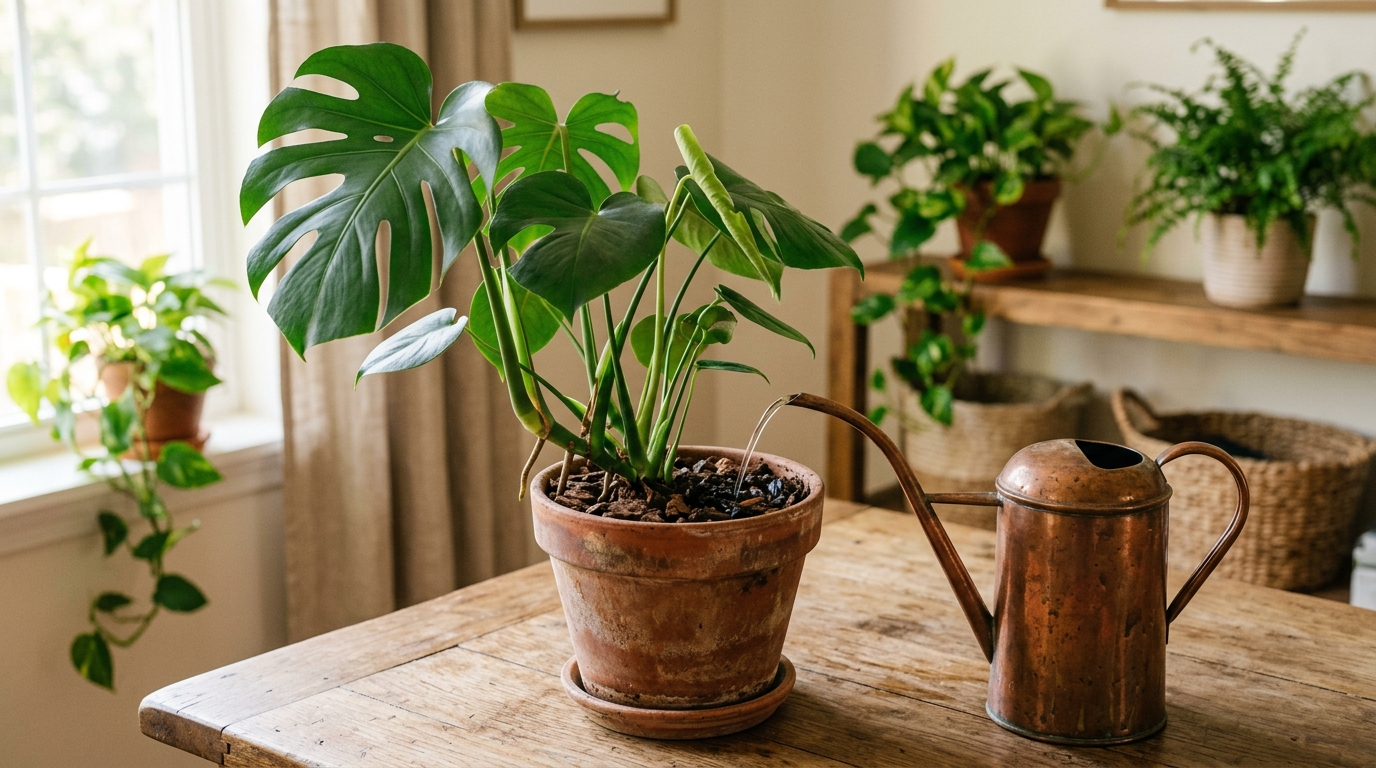
How Often to Water a Monstera (Schedule by Season)
Stop guessing on a rigid calendar. Discover how light, pot material, and seasonal growth cycles dictate your Monstera’s exact hydration needs—with a printable cheat-sheet.
Elena Vance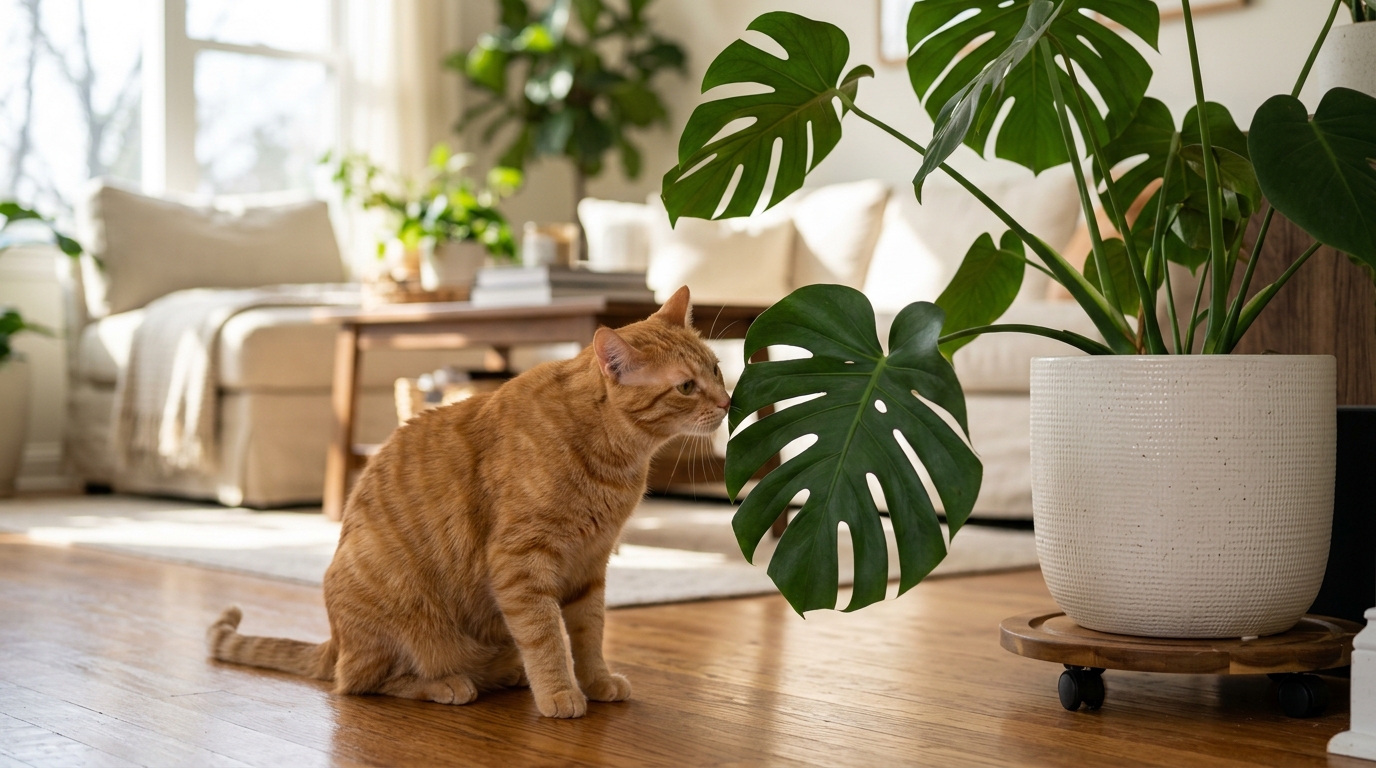
Are Monstera Toxic to Cats & Dogs? A Pet-Safety Guide
Everything pet owners need to know about Monstera toxicity, insoluble calcium oxalate crystals, emergency first-aid protocols, and 12 gorgeous pet-safe alternatives.
 Marcus Chen