Monstera Moss Poles: How to Use One (And When Your Plant Actually Needs It)
Climbing changes Monstera leaf physiology. Learn how to stake, train aerial roots, keep moss damp, and unlock gigantic fenestrated leaves.

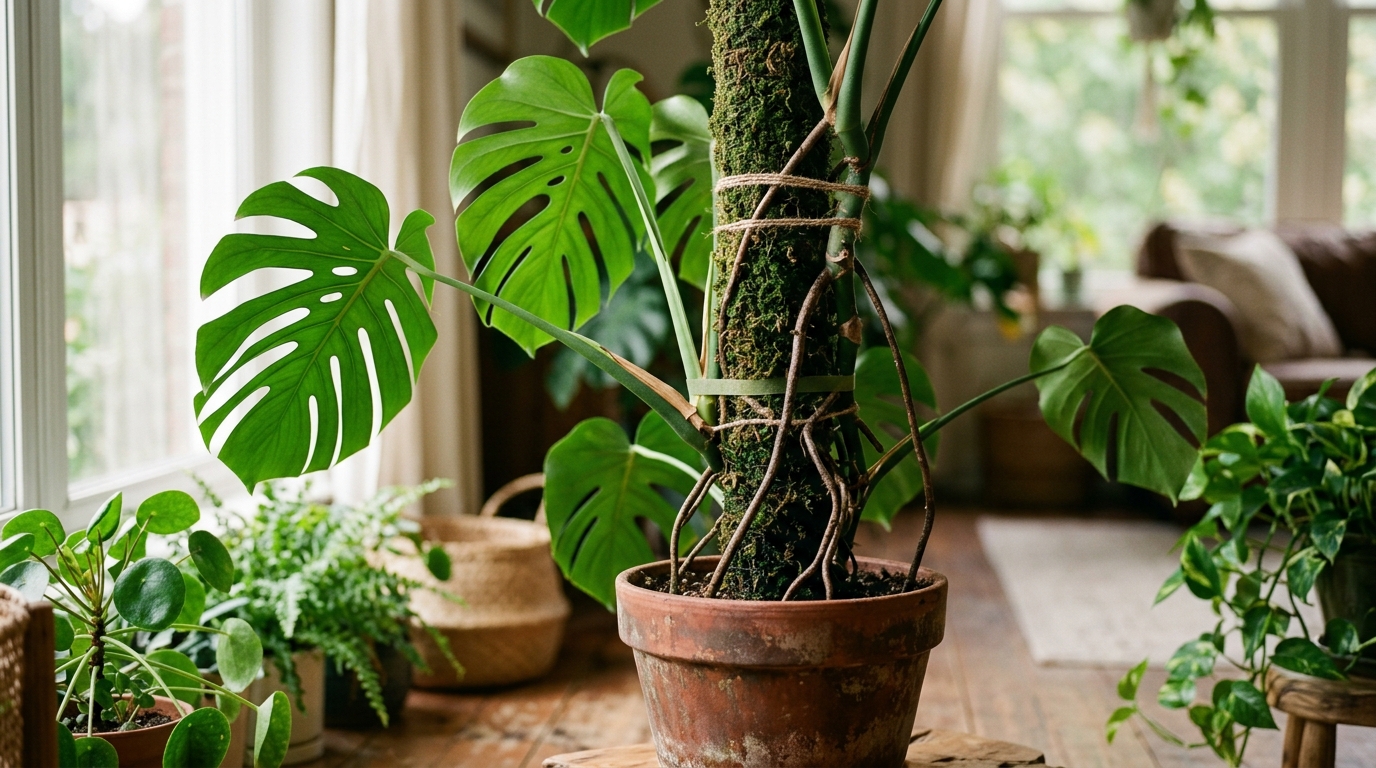

A Monstera on a moss pole is an entirely different plant than the same Monstera sprawling across a coffee table.
Climbing fundamentally changes its biological development: the leaves grow larger, the fenestrations multiply, and the plant transforms into the jungle giant it was meant to be. Monsteras are hemiepiphytes in nature, evolved to climb rain-drenched tree trunks toward sunlight. The leaves that form against a moist vertical support are structurally and anatomically distinct from young trailing vines.
1. Why Vertical Climbing Unlocks Giant Leaves
In their native rainforests, Monstera seedlings begin life on the forest floor with small, solid, unfenestrated heart-shaped leaves. As the vine climbs and its thick aerial roots physically anchor into damp tree bark:
- •Cellular sensors detect vertical resistance and moisture.
- •The plant increases vascular hormone production (auxins), stimulating the apical meristem to produce broader leaf blades.
- •To allow tropical winds and sunlight to pass through to lower foliage, mature leaves develop fenestrations (slits and perforations).
- •Without vertical support, an indoor Monstera eventually sprawls outward horizontally, producing smaller leaves and tangled vines.
2. When Does Your Plant Actually Need a Pole?
Look for aerial roots. If your Monstera begins putting out firm brown nubs along the stem that reach outward into the room, it is actively searching for a host tree. That is the ideal moment to stake it. A juvenile plant with only 3 or 4 small leaves does not need a pole yet.
3. Choosing Your Vertical Support
4. Step-by-Step Installation (Without Damaging Roots)
5. Keeping the Moss Pole Hydrated
A bone-dry moss pole is just a stick. For aerial roots to anchor and drink, the moss must stay lightly damp:
- •Mist the pole every 2 to 3 days with a [Brass Plant Mister](/shop/vintage-solid-brass-mister).
- •Alternatively, invert a small water bottle with a pinhole in the cap atop the pole for an automatic slow drip.
- •Pair this with our [Monstera Seasonal Watering Guide](/blog/how-often-to-water-a-monstera-schedule-by-season) to ensure balance.
- •Vertical staking is also exceptional for rare cultivars featured in our [Monstera Varieties & Prices Guide](/blog/monstera-varieties-and-prices-2026).
Frequently Asked Questions
Does a moss pole really make Monstera leaves bigger?
Yes. When aerial roots penetrate moist moss, the plant absorbs additional water and nutrients at height, stimulating the apical meristem to produce larger leaves with double fenestrations.
How do I get my Monstera to attach to the pole?
Point the aerial roots directly against the moist moss and secure the main vine loosely with plant ties. Within 3 to 6 weeks, the roots will burrow into the moss on their own.
Sources & Citations
- •International Aroid Society (IAS): Epiphytic Climbing Dynamics in Neotropical Monstera.
- •University of Florida IFAS Extension: EDIS HS311.
Frequently Asked Questions
Q: Does a moss pole really work?
Yes, if it is kept damp. A moist pole lets aerial roots anchor, and anchored climbing monsteras reliably produce larger, more fenestrated leaves than trailing ones.
Q: What can I use instead of a moss pole?
Coco fiber poles, cedar boards, wooden planks, or even a thick wooden dowel wrapped in jute. Anything vertical, stable, and slightly grippy works.
Shop Botanicals Mentioned in This Story
Bring the living plants and tools from this article straight into your home.


Monstera Deliciosa + Sphagnum Moss Pole Bundle
Monstera deliciosa
More from The Journal
View All Stories →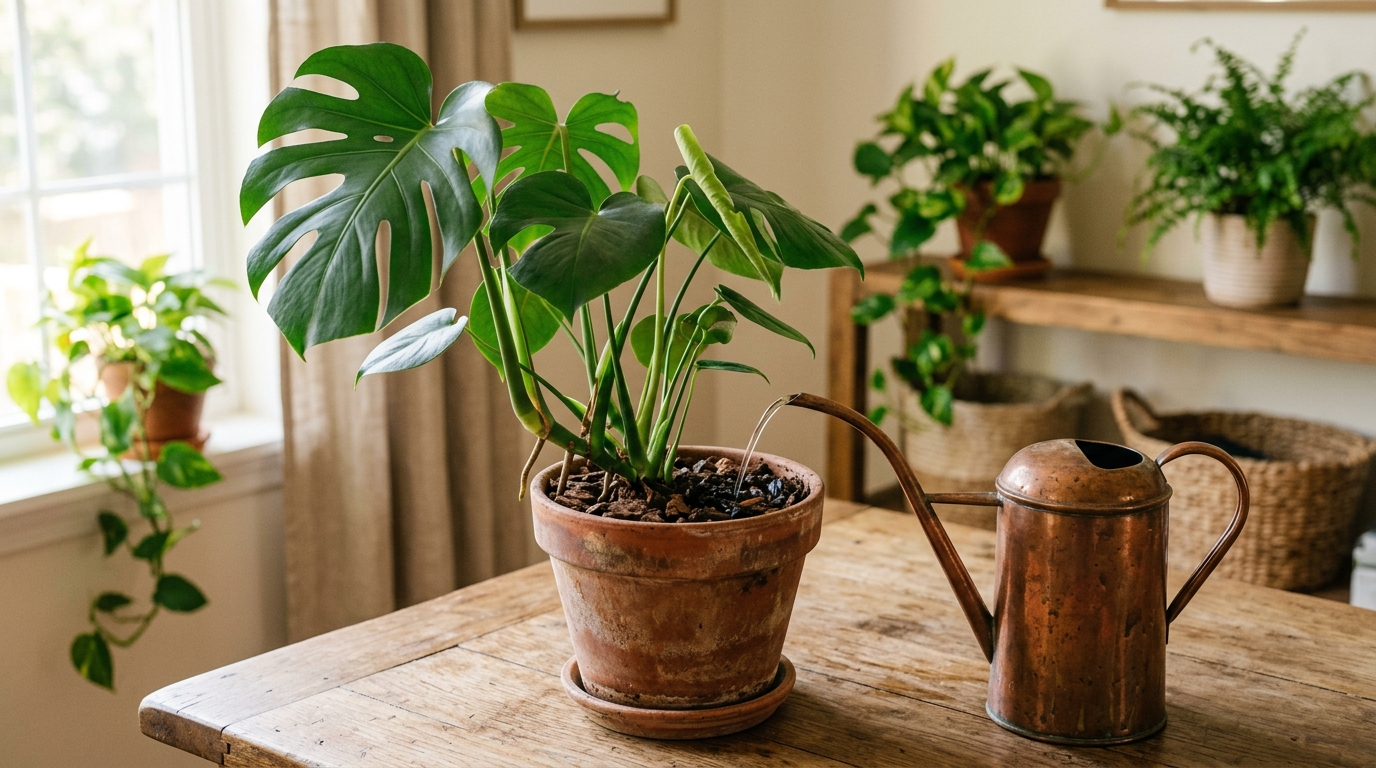
How Often to Water a Monstera (Schedule by Season)
Stop guessing on a rigid calendar. Discover how light, pot material, and seasonal growth cycles dictate your Monstera’s exact hydration needs—with a printable cheat-sheet.
Elena Vance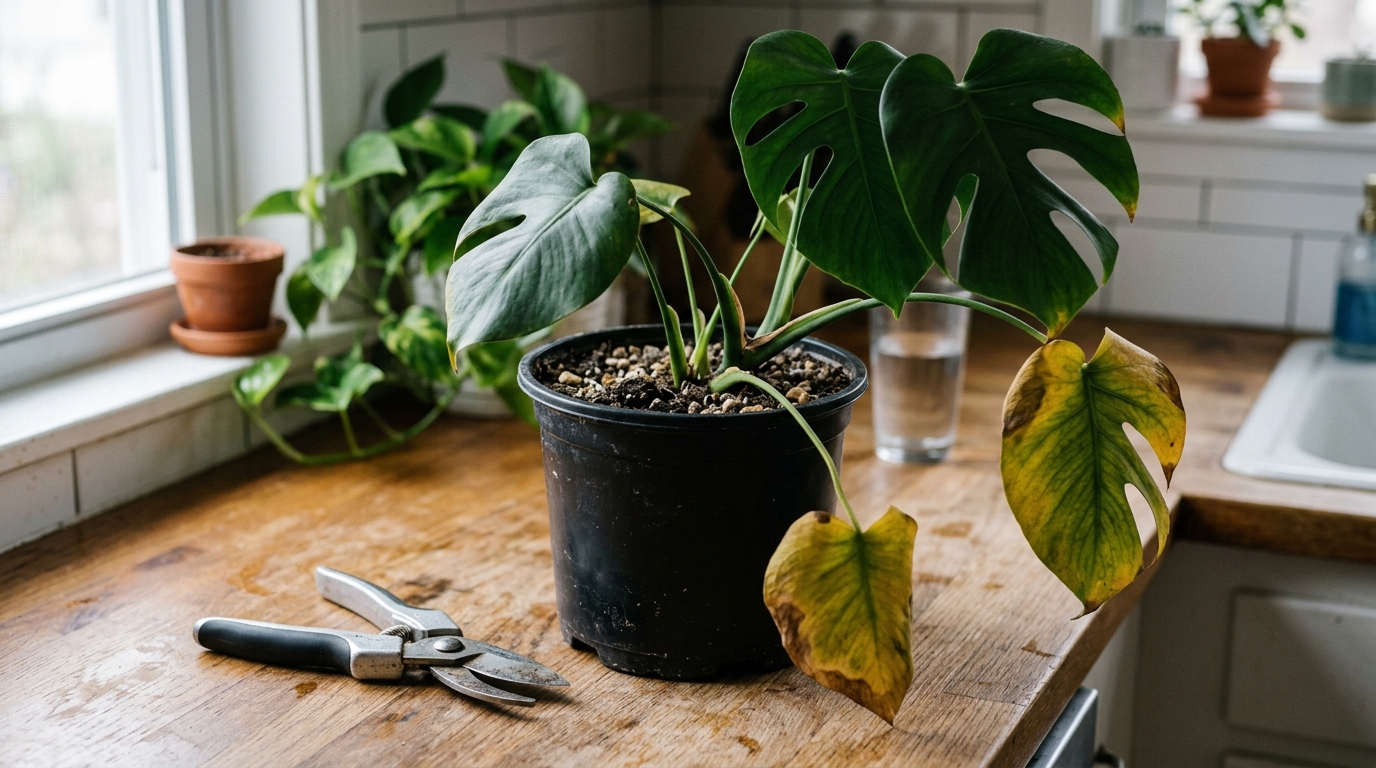
Why Is My Monstera Dying? 7 Fixes for Yellow Leaves, Root Rot & Drooping
Do not panic when your prized Monstera develops yellow leaves or limp stems. Follow our emergency triage protocol to diagnose root rot, shock, or pests—and nurse it back to life.
Elena Vance