Mini Monstera Care Guide (Rhaphidophora Tetrasperma)
Rhaphidophora tetrasperma care: light, water, soil, propagation, and troubleshooting — plus how to tell it apart from a true monstera adansonii or deliciosa.

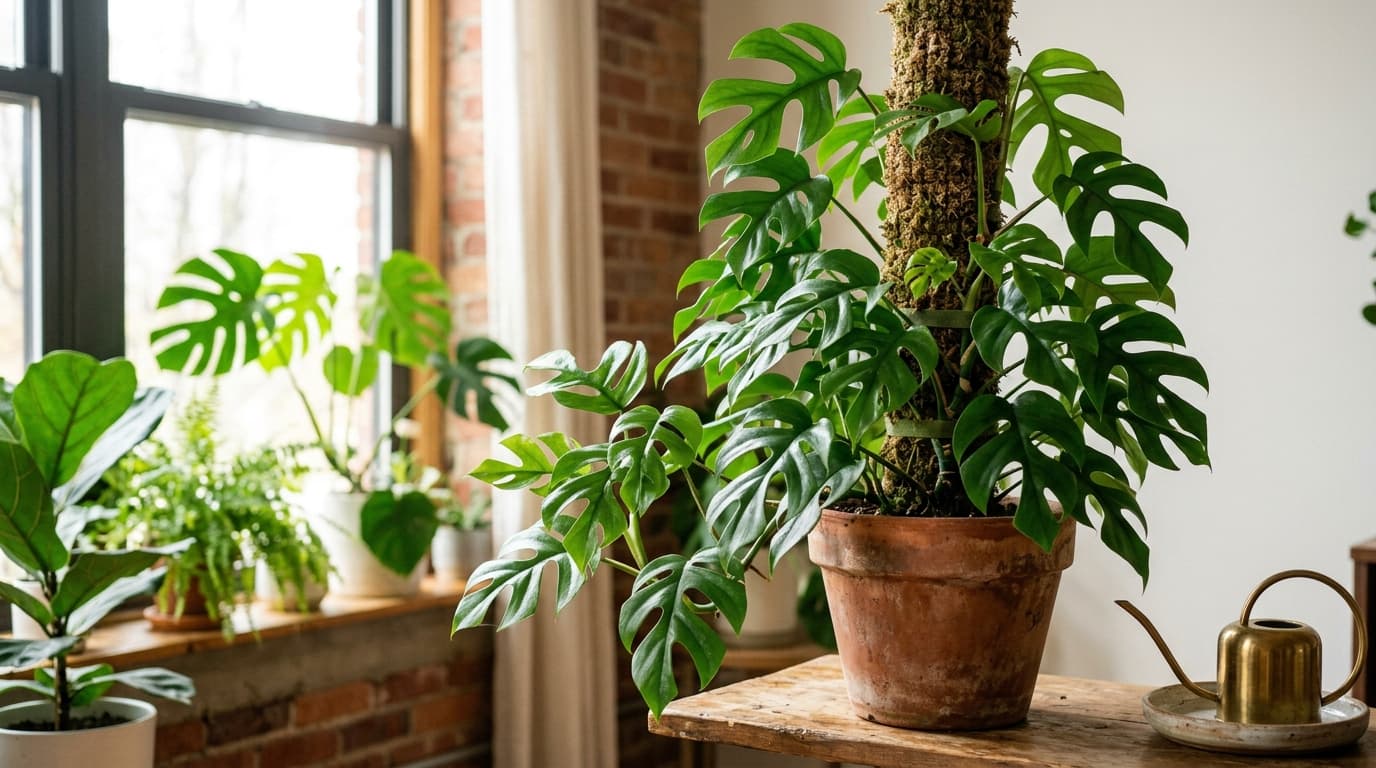
If you bought a “mini monstera” expecting a scaled-down Monstera deliciosa, here's the first thing worth knowing: it isn't one. Rhaphidophora tetrasperma is a separate genus entirely, and the resemblance — split, fenestrated leaves on a climbing aroid vine — is closer to convergent evolution among rainforest vines than any close relation. It's sold as mini monstera, Monstera minima, and occasionally “monstera ginny,” none of which are botanically accurate, but the name has stuck regardless.
What It Actually Is
Rhaphidophora tetrasperma belongs to the aroid family Araceae, the same family as monstera and philodendron, and is native to Thailand and Malaysia rather than the Central and South American range of true monsteras. It's a hemiepiphyte vine, climbing trees in its native habitat while rooting into the soil below, and indoors it behaves the same way: given a pole to climb, it pushes larger leaves with more pronounced splits; left to trail, it stays smaller and less dramatically fenestrated.
Light
Bright, indirect light is what it wants, and it tolerates medium light reasonably well, though growth slows and leaves come in smaller and less split. Avoid direct hot sun, which scorches the thinner leaves. An east-facing window, or a spot back from a bright south or west window, both work well.
Watering
Water when the top 1-2 inches of soil feel dry, which in practice lands around once a week during active growth and stretches out in fall and winter. It's a genuinely fast grower compared to either monstera species, so it also tends to drink a bit more often during a growth spurt. Wrinkled or curling leaves point to underwatering; yellowing lower leaves and a musty smell point to overwatering and possible root rot.
Soil
A chunky, fast-draining aroid mix works best: standard potting soil cut with perlite and orchid bark or coco chunks. Always use a pot with drainage holes. Because this plant grows quickly, it's also one of the more frequent repotters among common aroids — expect to size up every 12-18 months during vigorous growth, going up only 1-2 inches in diameter each time.
Humidity and Temperature
It prefers humidity in the 50-60% range and above, and will tolerate average home humidity, though leaf edges can crisp in a very dry room, especially near a heating vent in winter. Keep it between roughly 65-85°F and away from cold drafts and single-pane windows.
Feeding
Feed with a balanced, water-soluble fertilizer at half strength every 2-4 weeks during spring and summer, when this plant is actively pushing new growth fast enough that you'll notice it week to week. Skip fertilizing in fall and winter.
Propagation
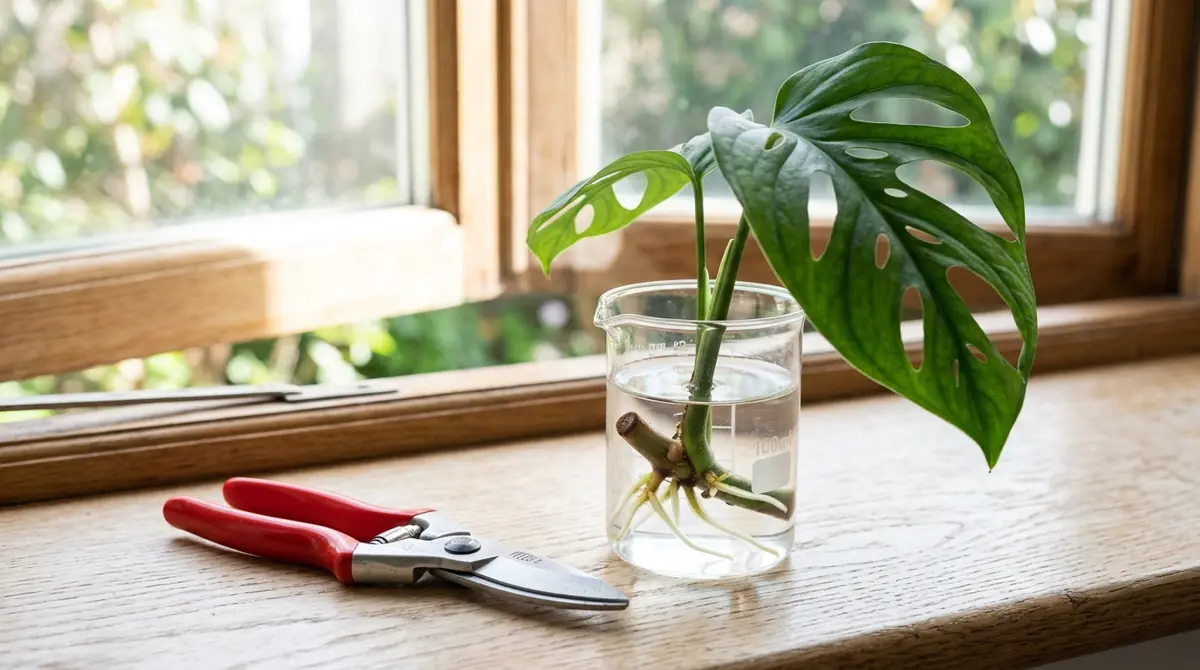
Find a node (the small bump on the stem, usually with an aerial root nearby) and take a cutting with at least one node attached. Water propagation typically shows roots within 2-3 weeks, faster than either true monstera species, and cuttings are usually ready to pot up around 4-5 weeks in. It also propagates well directly in a chunky, damp soil mix if you'd rather skip the water stage.
Common Problems: Troubleshooting by Symptom
| Symptom | Likely Cause | What to Do |
|---|---|---|
| Small leaves, few or no splits | Not enough light, or nothing to climb | Move to brighter indirect light; add a moss pole |
| Yellowing lower leaves, soil wet | Overwatering | Let soil dry out more; check roots for rot |
| Brown, crispy leaf edges | Low humidity or underwatering | Water more consistently; consider a humidifier |
| Leggy vine, long gaps between leaves | Too little light | Brighter spot; this plant stretches toward light fast |
| Slowed growth in winter | Normal seasonal dormancy | Reduce watering and feeding; don't force growth |
| Sudden leaf drop after repotting | Transplant shock | Keep conditions stable a few weeks; skip fertilizer |
Toxicity
Rhaphidophora tetrasperma isn't individually named on the ASPCA's toxic plant list, but as a member of the aroid family alongside monstera and philodendron, it's reasonable to treat it the same way: it very likely contains the same insoluble calcium oxalate crystals, which cause oral irritation, drooling, and vomiting if chewed. Keep it out of reach of curious pets the same as you would any other aroid, and check our Non-Toxic Indoor Plants Guide if you're building out a pet-safe plant collection.
Which Monstera-Family Plant Do I Actually Have?
This gets confused constantly, so here's the fast way to tell them apart:
- •True Monstera deliciosa: Large, thick leaves eventually splitting deeply to the leaf edge, can grow into a genuinely large plant. See our Monstera Watering Schedule for full deliciosa care.
- •Monstera adansonii (also sold as Swiss Cheese Vine): Smaller, thinner heart-shaped leaves with oval holes scattered through the leaf's interior, not reaching the edge. See our full Monstera Adansonii Care Guide.
- •Rhaphidophora tetrasperma (this plant): The fastest grower of the three, similar fenestration pattern to adansonii but a different genus entirely, with narrower, glossier, more uniformly dark-green leaves and thinner stems.
If you're not sure which one is on your shelf, the growth speed is often the fastest tell: if it's noticeably outgrowing everything else within a few months, it's very likely the mini monstera rather than either true species.
Frequently Asked Questions
Is a mini monstera a real monstera?
No. It's Rhaphidophora tetrasperma, a different genus in the same aroid family (Araceae) as true monsteras. The resemblance in leaf shape and fenestration is close, but they aren't the same plant.
How fast does a mini monstera grow compared to a real monstera?
Noticeably faster. Given bright light and something to climb, it can put out new leaves every couple of weeks during the growing season.
Is mini monstera toxic to cats and dogs?
It isn't individually listed by the ASPCA, but as an aroid relative of monstera and philodendron it very likely contains the same calcium oxalate crystals and should be treated as toxic.
Sources & Citations
- •ASPCA Animal Poison Control: Plant toxicity listings (aroid family toxic principle).
- •Thursd & Ourhouseplants.com: Grower care guides for light, watering, humidity, and growth-rate comparisons.
Frequently Asked Questions
Q: Is a mini monstera a real monstera?
No. It's Rhaphidophora tetrasperma, a different genus in the same aroid family (Araceae) as true monsteras.
Q: How fast does a mini monstera grow compared to a real monstera?
Noticeably faster. Given bright light and something to climb, it can put out new leaves every couple of weeks during the growing season.
Q: Is mini monstera toxic to cats and dogs?
It very likely contains the same calcium oxalate crystals as monstera and philodendron and should be treated as toxic to pets.
Shop Botanicals Mentioned in This Story
Bring the living plants and tools from this article straight into your home.
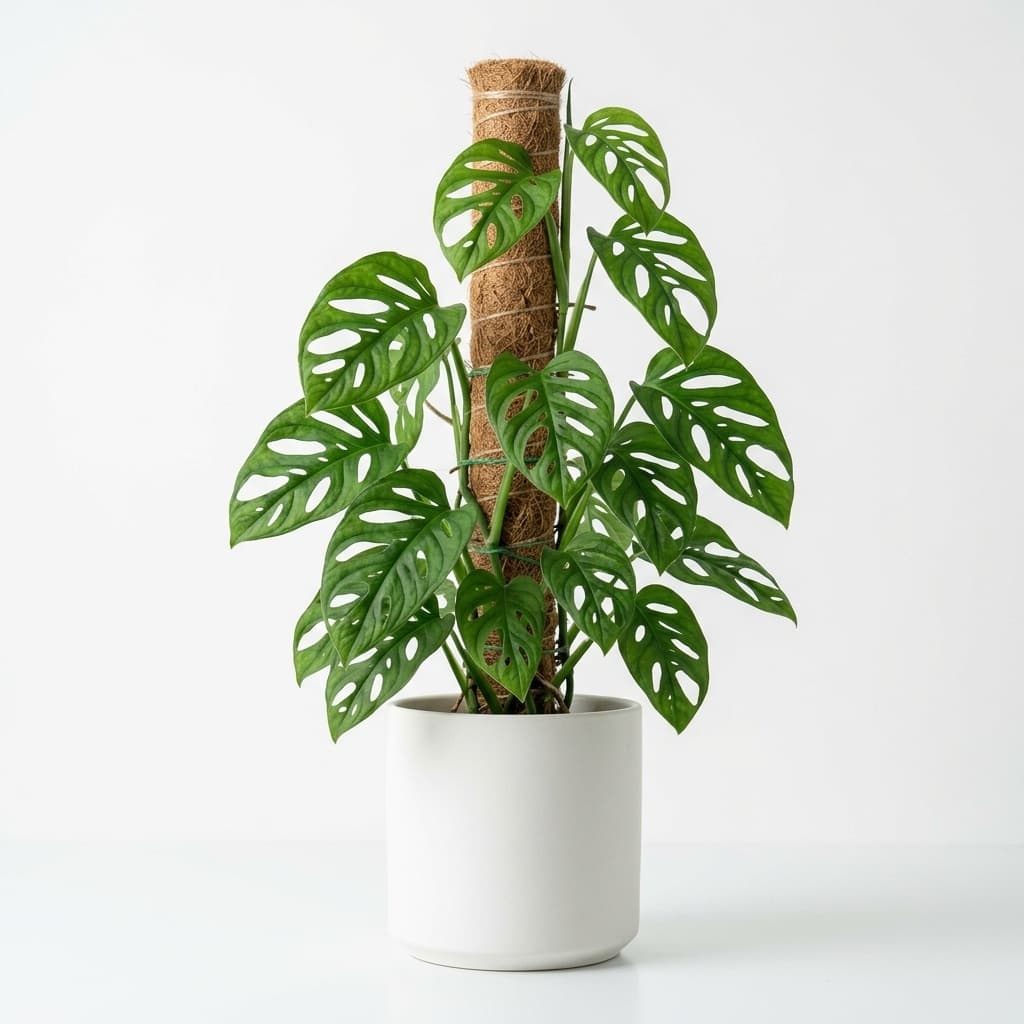
Monstera Adansonii (Swiss Cheese Vine)
Monstera adansonii
More from The Journal
View All Stories →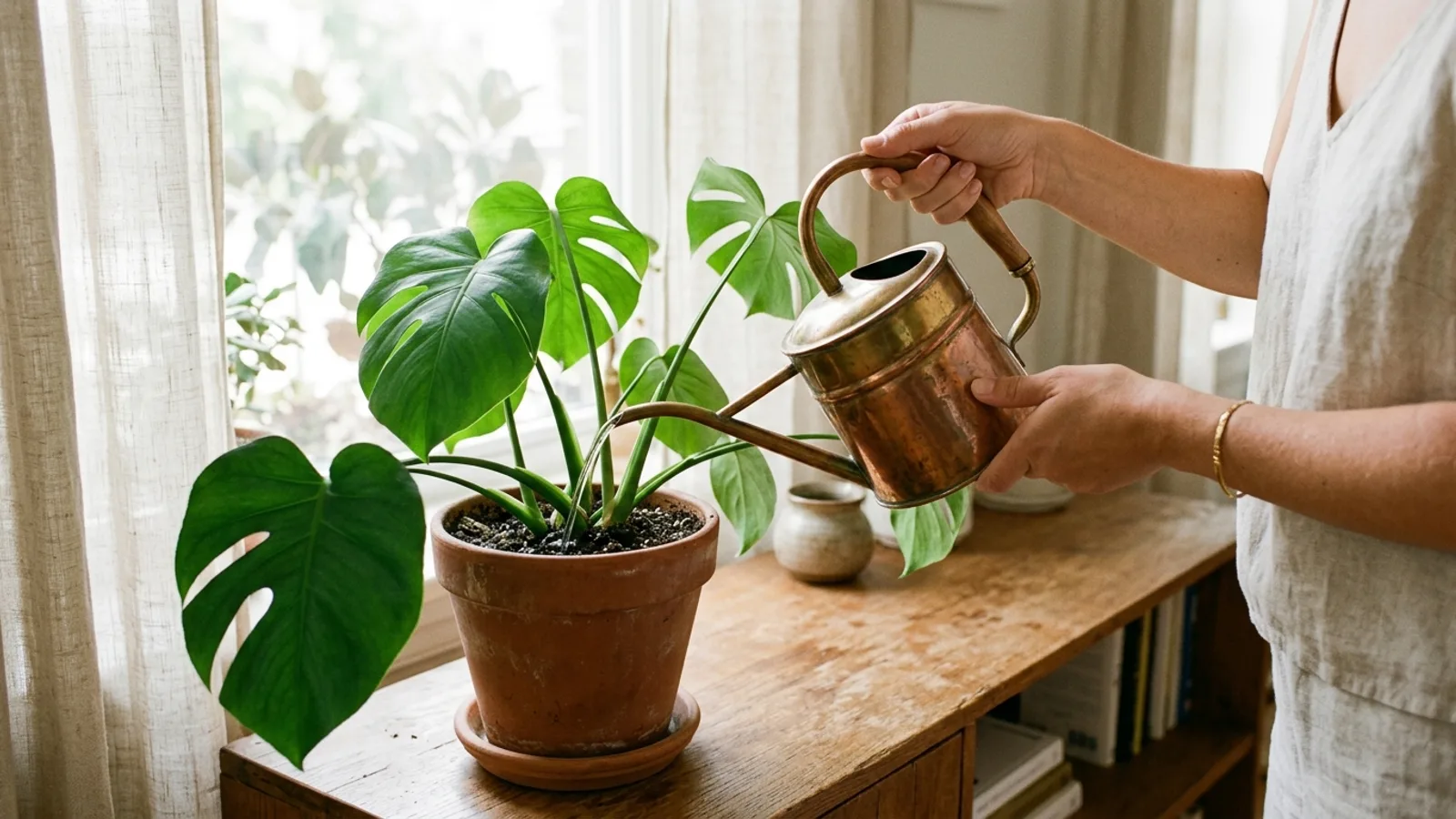
How Often to Water a Monstera (Schedule by Season)
Stop guessing on a rigid calendar. Discover how light, pot material, and seasonal growth cycles dictate your Monstera’s exact hydration needs—with a printable cheat-sheet.
 Elena Vance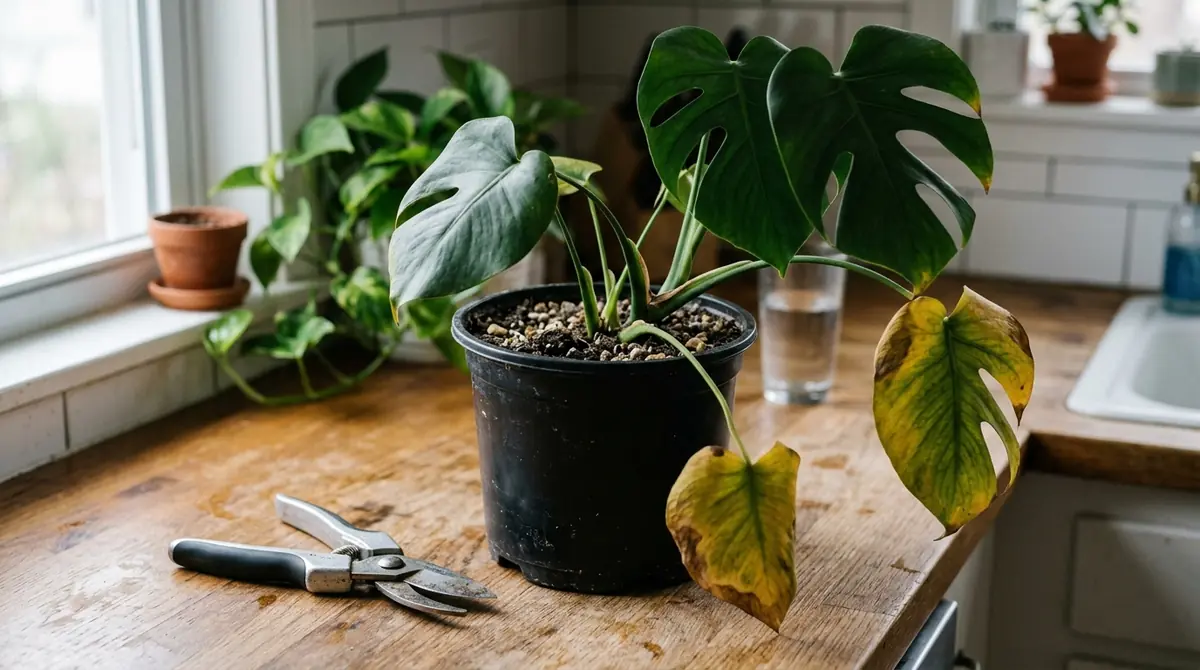
Why Is My Monstera Dying? 7 Fixes for Yellow Leaves, Root Rot & Drooping
Do not panic when your prized Monstera develops yellow leaves or limp stems. Follow our emergency triage protocol to diagnose root rot, shock, or pests—and nurse it back to life.
Elena Vance