Philodendron Pink Princess Care (And What It Should Actually Cost in 2026)
Pink Princess philodendron crashed from $200 hype to $25 today. Learn light requirements, how to prune green reversion, and 2026 market prices.

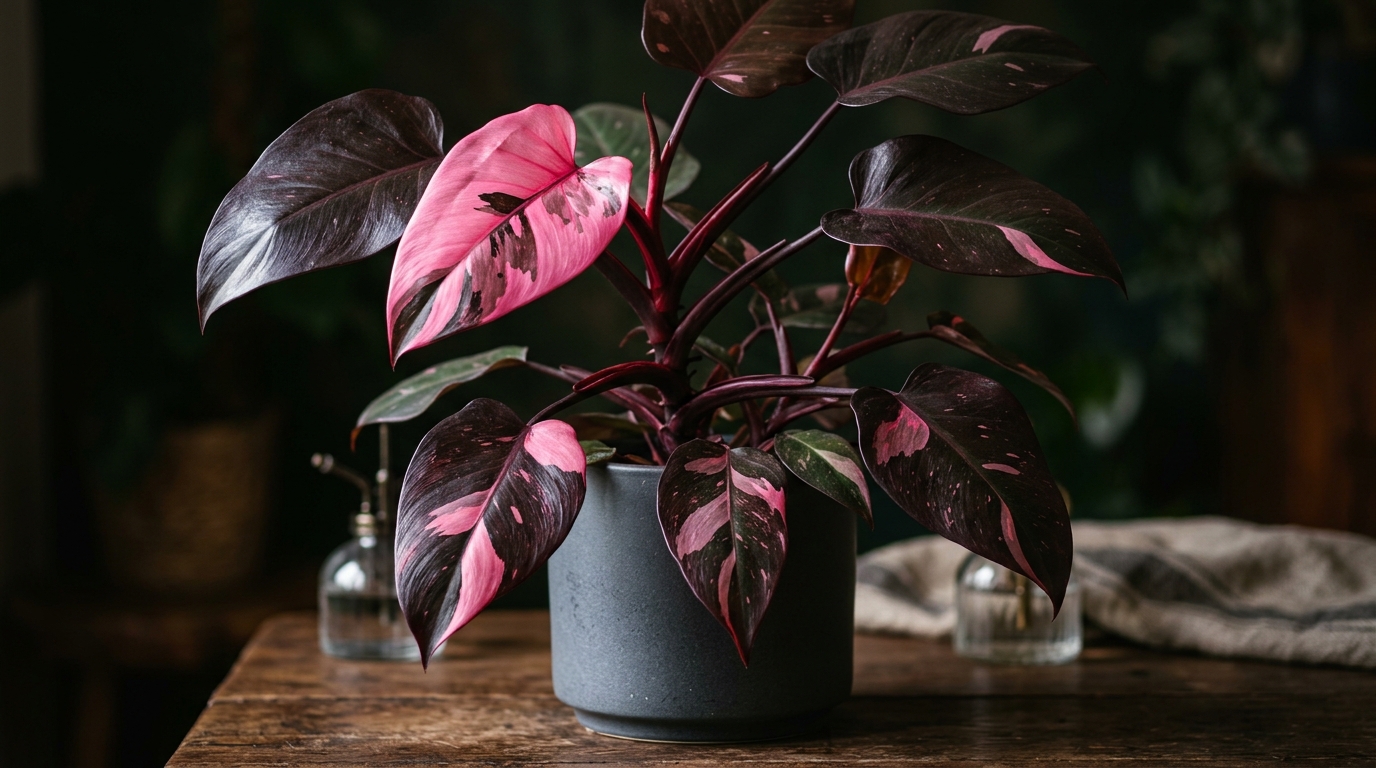

Few indoor plants have experienced a financial rollercoaster quite like the Pink Princess Philodendron (PPP).
In 2020, plant collectors paid hundreds of dollars for a single rooted cutting. Then commercial tissue culture micropropagation scaled up, labs flooded the market with tens of thousands of clones, and prices returned to sanity. Today, an exceptional starter plant costs about the same as any standard houseplant—which is wonderful news for plant lovers.
1. What a Pink Princess Actually Costs in 2026
Our team evaluated approximately 108 verified transactions across eBay, Etsy, and independent nurseries in September 2026:
- •Starter Plants (3–5 leaves, established roots): $20 – $40 (eBay median: ~$30).
- •Medium Established Plants (6–10 leaves, strong pink): $45 – $75.
- •Large Climbing Specimen on a Pole: $85 – $140.
Anyone charging 2020-era prices ($150+ for a starter) is attempting to sell the memory of an obsolete market. When shopping, check the stem variegation—plants with visible pink striping on the stem cane are genetically far more likely to produce high-pink foliage. This mirrors the market dynamics explained in our [Monstera Varieties & Prices Guide](/blog/monstera-varieties-and-prices-2026).
2. Light: The Engine Behind Pink Foliage
Pink variegation in Philodendrons is caused by a genetic mutation that deprives cells of chlorophyll, revealing anthocyanin pigments beneath:
- •The green sections of the leaf photosynthesize and generate food for the plant.
- •The pink sections produce zero chlorophyll and depend entirely on the green tissue to survive.
- •The Sweet Spot: Place your Pink Princess 2 to 4 feet away from an East or South window in bright, indirect sunlight. Gentle early morning sun encourages vibrant pink coloration, while harsh afternoon sun will scorch the fragile pink tissue.
- •In dim corners, the plant compensates by pushing all-green leaves to maximize food production.
3. The Reversion Problem: How to Prune Back to a Node
Because Pink Princess variegation is chimeric and genetically unstable, plants occasionally begin pushing out solid dark green leaves. If left alone, the all-green growth takes over, permanently reverting the vine.
The Reset Protocol:
4. Substrate, Staking & Water Care
- •Soil Mix: A loose, aerated blend of 50% orchid bark, 30% coco coir, and 20% coarse perlite. Pot into our [Chunky Forest Aroid Potting Mix](/shop/chunky-forest-aroid-potting-mix).
- •Watering: Allow the top 50% of the potting mix to dry out before soaking thoroughly. Check intervals with our [Houseplant Watering Calculator](/tools/houseplant-watering-calculator).
- •Vertical Support: Pink Princess is a climbing hemiepiphyte. Giving it a vertical cedar stake or moss pole (see our [Moss Pole Guide](/blog/how-to-use-monstera-moss-pole-guide)) prevents leggy vines and encourages broader leaves.
Frequently Asked Questions
Why is my Pink Princess turning completely green?
This is genetic reversion. Because green tissue photosynthesizes more efficiently than pink tissue, the plant favors green growth under lower light. Prune the stem back to the last node that showed pink variegation.
Are Pink Princess Philodendrons toxic to pets?
Yes. Like all Philodendron species, Pink Princess contains insoluble calcium oxalate crystals that cause oral burning and drooling in pets, as detailed in our [Pet-Safety Guide](/blog/are-monstera-toxic-to-cats-and-dogs-pet-safety-guide).
Sources & Citations
- •Ferny's Market Pricing Index: Median calculated across 108 verified sales (September 2026).
- •University of Florida IFAS: Commercial Philodendron Production Guidelines.
Frequently Asked Questions
Q: Why is my pink princess turning all green?
Reversion. The all-green leaves photosynthesize better, so the plant pushes them when it can. Prune the stem back to the last node that showed pink variegation.
Q: Why did pink princess get so cheap?
Tissue culture. Labs learned to mass-produce the plant from cells, which removed the scarcity that drove the 2020 price spike. The plant did not get worse; the supply chain got real.
Shop Botanicals Mentioned in This Story
Bring the living plants and tools from this article straight into your home.


More from The Journal
View All Stories →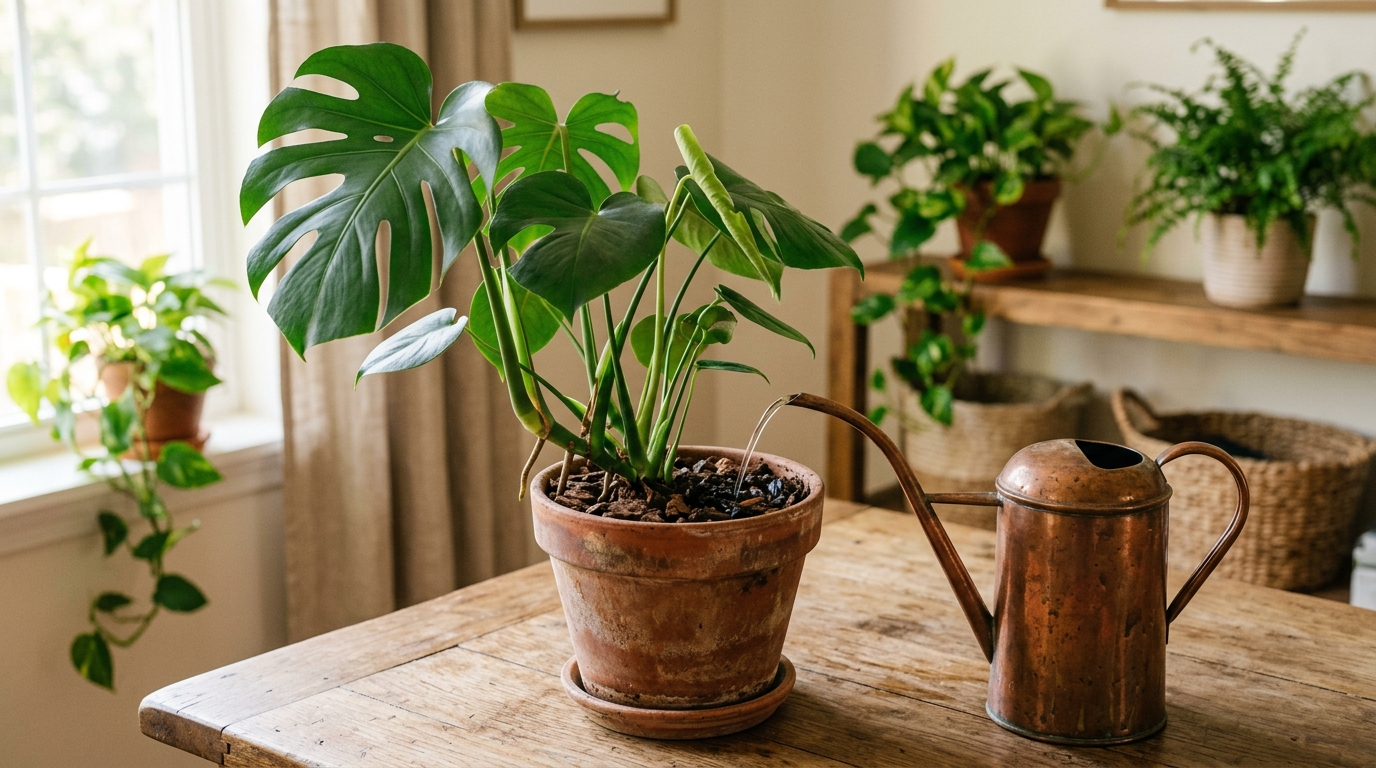
How Often to Water a Monstera (Schedule by Season)
Stop guessing on a rigid calendar. Discover how light, pot material, and seasonal growth cycles dictate your Monstera’s exact hydration needs—with a printable cheat-sheet.
 Elena Vance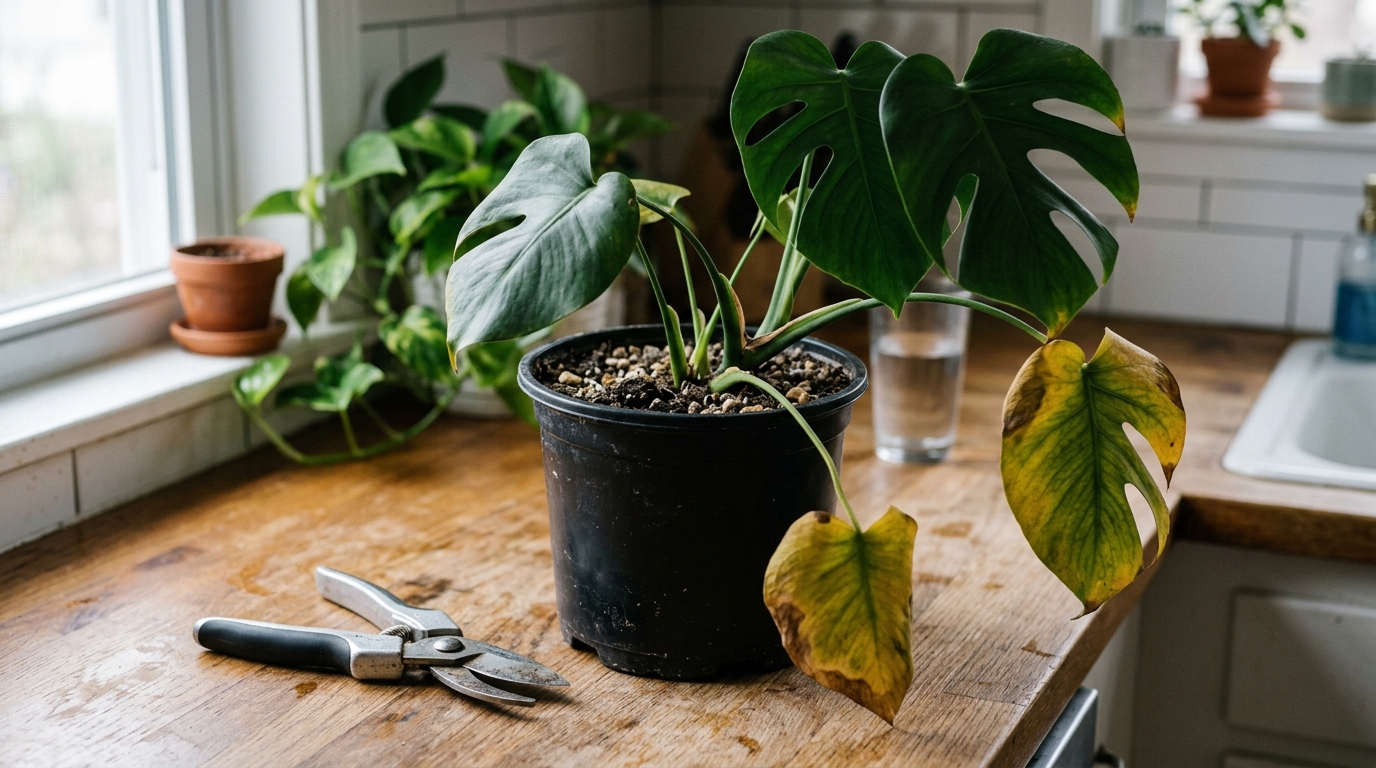
Why Is My Monstera Dying? 7 Fixes for Yellow Leaves, Root Rot & Drooping
Do not panic when your prized Monstera develops yellow leaves or limp stems. Follow our emergency triage protocol to diagnose root rot, shock, or pests—and nurse it back to life.
Elena Vance