Pothos Care Guide (Light, Water, Soil, Toxicity, and Propagation)
How to care for pothos: light, watering, soil, propagation, and common problems — plus the toxicity risk to cats and dogs most care guides leave out.

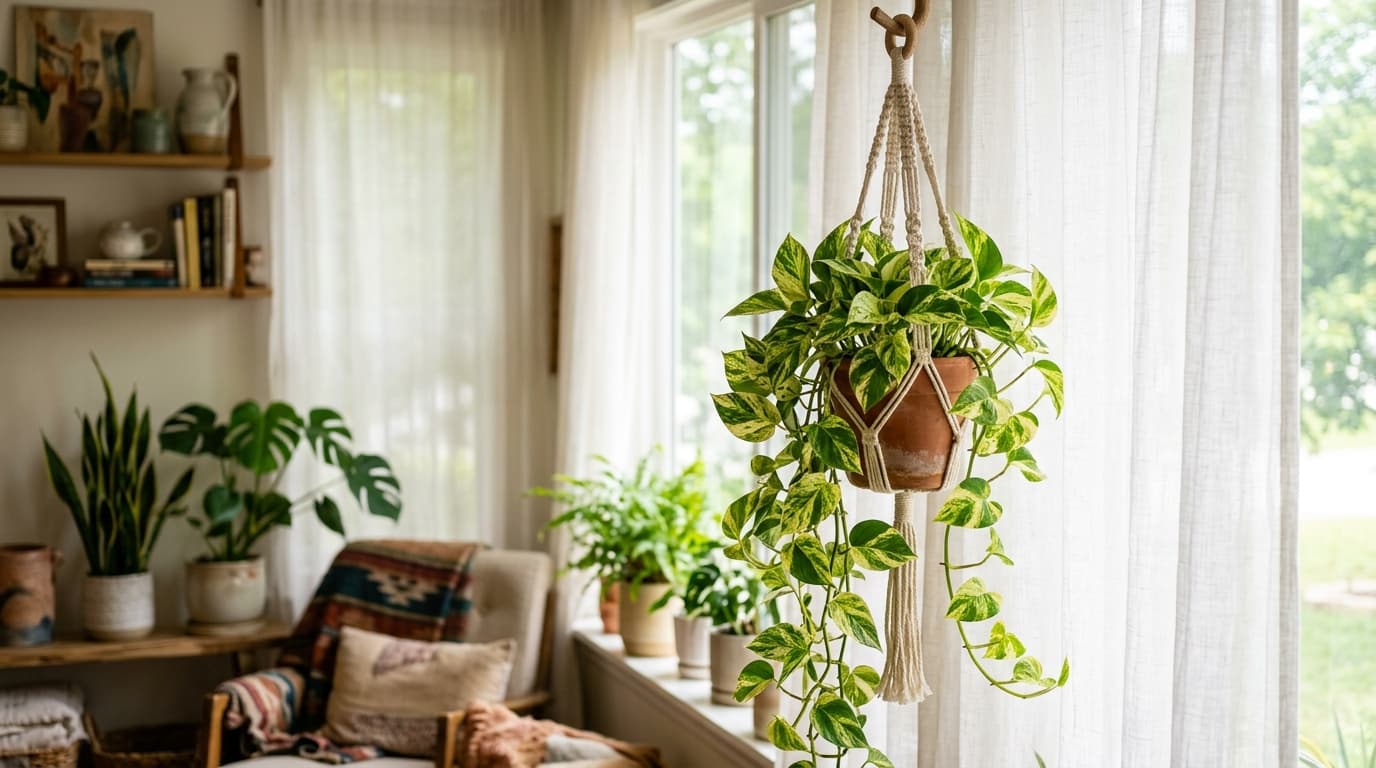
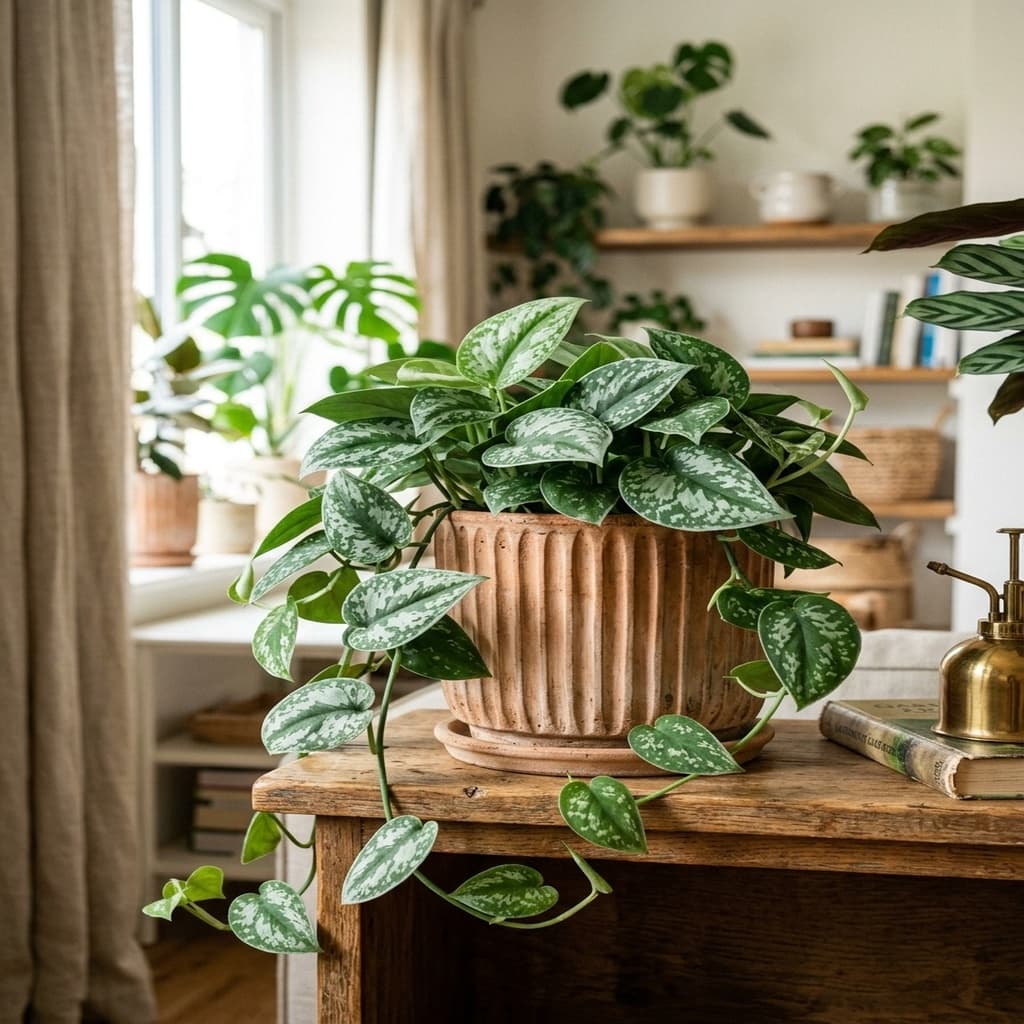
Pothos (Epipremnum aureum) is sold under a dozen names — devil's ivy, golden pothos, taro vine — and it earns the reputation as the plant you can't kill for good reason: it tolerates low light, irregular watering, and rough handling better than almost anything else people bring home. That said, “hard to kill” isn't the same as “nothing to know,” especially if you share your home with a cat or dog.
Light
Pothos does best in bright, indirect light, which brings out the strongest variegation on cultivars like Marble Queen and Snow Queen. It will also survive in low light, including a windowless office corner, but the leaves come in smaller, more uniformly green, and the vines grow slower and leggier as they stretch toward whatever light they can find. Direct hot sun will scorch the leaves, especially the more variegated white-and-green patches, which have less chlorophyll to protect themselves.
Watering
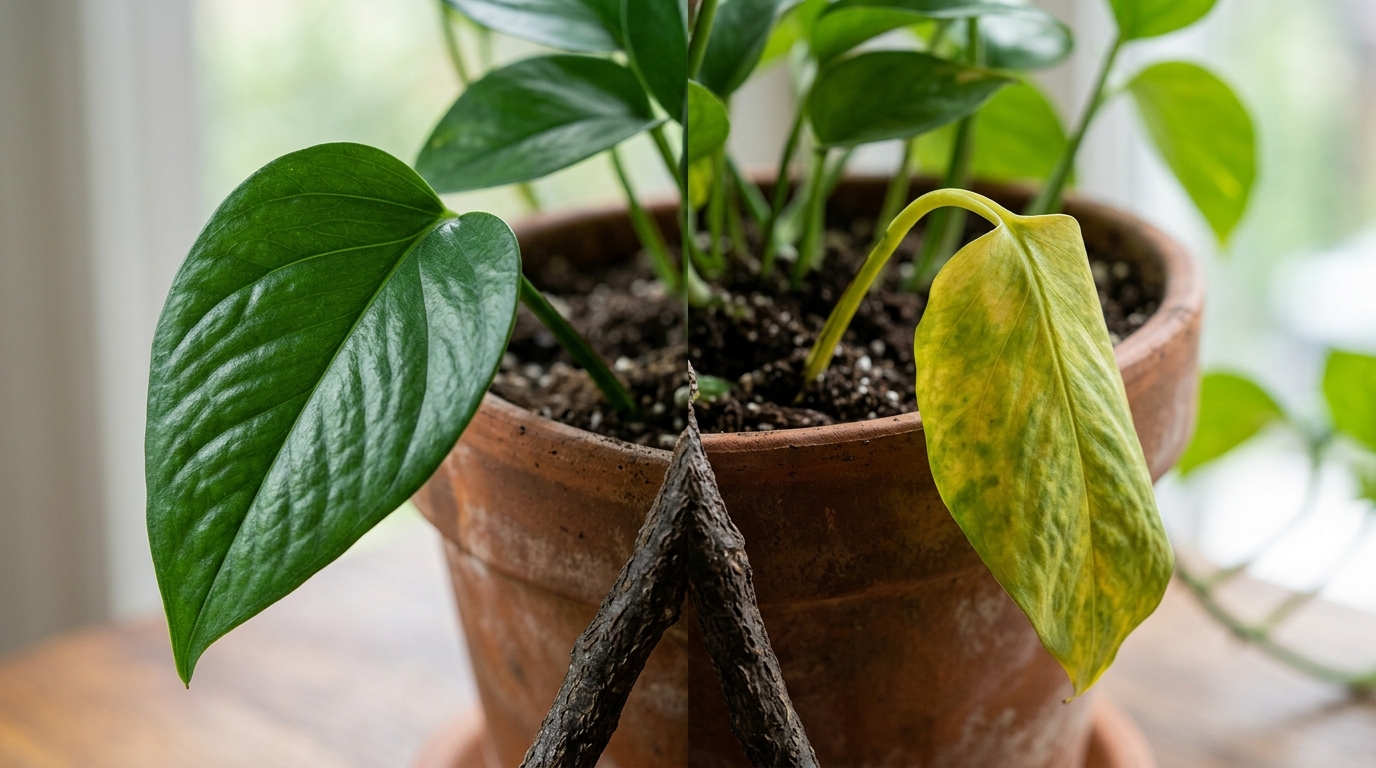
Let the top 1-2 inches of soil dry out between waterings, which in an average home lands around once every 1-2 weeks and stretches longer in winter. Pothos is far more forgiving of a missed watering than an extra one: overwatering and poor drainage are the single most common way people kill this plant, usually by way of root rot in a pot with no drainage hole.
| Sign | Usually Means |
|---|---|
| Yellow leaves, soil staying wet | Overwatering / root rot |
| Brown, crispy leaf edges | Underwatering or low humidity |
| Leaves curling inward | Underwatering, or asking for water soon |
| Black, mushy stems at the base | Advanced root rot — act quickly |
Soil and Potting
Any well-draining potting mix works, and pothos isn't fussy about pH or nutrients the way some aroids are. A standard indoor potting soil with a handful of perlite mixed in for extra drainage is plenty. Always use a pot with a drainage hole. Repot only when roots start circling the bottom of the pot or pushing out of the drainage hole, roughly every 1-2 years, going up just one pot size at a time.
Humidity and Temperature
Average home humidity is fine; pothos doesn't need misting or a humidifier to thrive, though it will grow a little faster and lusher in higher humidity. Keep it between roughly 65-85°F and away from cold drafts and heating vents, which dry it out and stress the leaves faster than the humidity level itself does.
Feeding
Feed monthly with a balanced, water-soluble houseplant fertilizer during spring and summer. Skip it in fall and winter, when growth naturally slows and unused fertilizer salts just accumulate in the soil.
Propagation
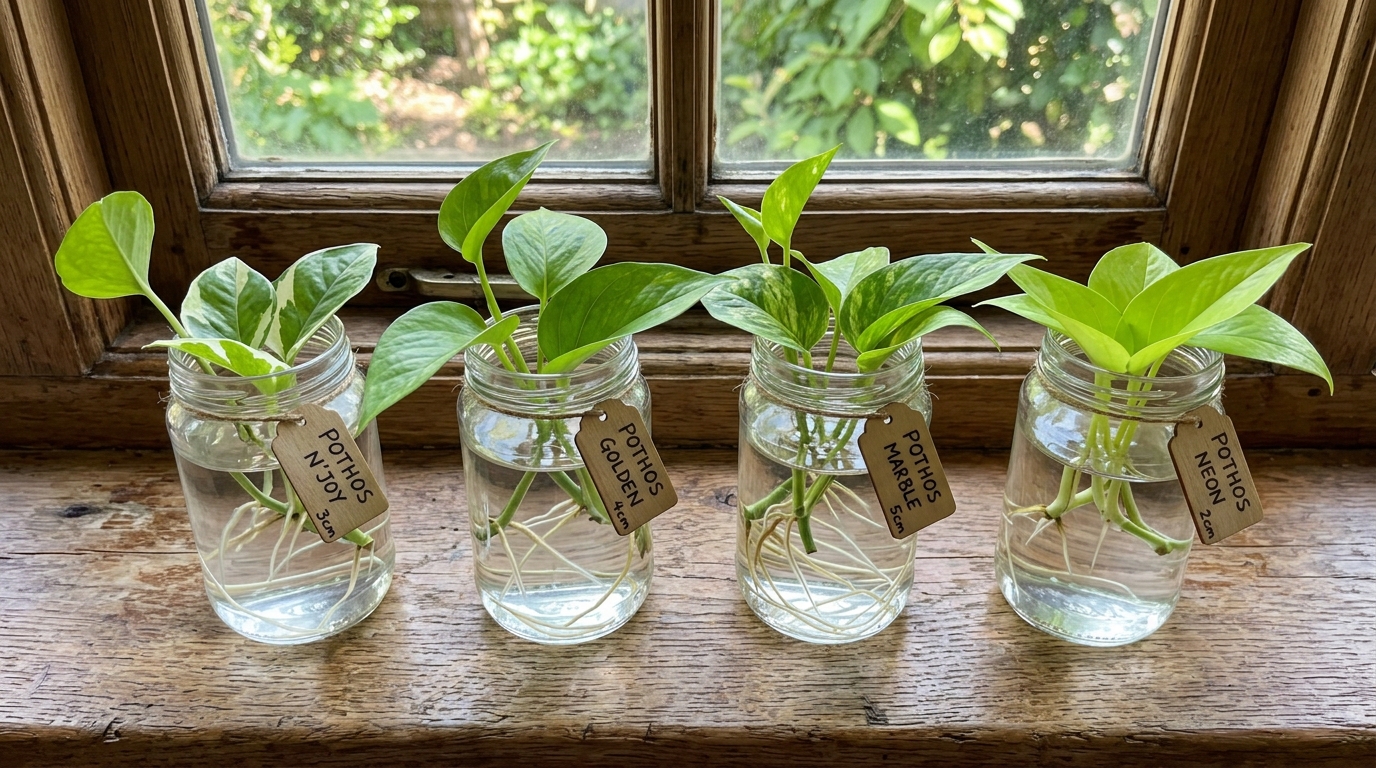
Pothos might be the easiest houseplant in the world to propagate, and unlike some care guides that just point you elsewhere for this part, here's the whole thing. Cut a stem just below a node (the small brown bump, usually with a little aerial root nub, where a leaf attaches). Every cutting needs at least one node, the same rule as monstera. Put the cutting in a jar of water with the node submerged and the leaf above the waterline, in bright indirect light, and change the water every 5-7 days. Roots typically show within 1-2 weeks, and cuttings are usually ready to pot into soil once roots reach about 2 inches, around 4-6 weeks in. You can also skip water entirely and root cuttings directly in moist soil, which avoids the transition shock a water-rooted cutting sometimes goes through.
Common Problems
| Problem | Likely Cause | Fix |
|---|---|---|
| Yellow leaves | Overwatering | Let soil dry out more; check for root rot |
| Brown crispy tips | Underwatering, low humidity, or fertilizer buildup | Water more consistently; flush soil occasionally |
| Leggy vines, small sparse leaves | Not enough light | Move to a brighter (still indirect) spot |
| Mealybugs (white cottony spots) | Common pest on stressed plants | Dab with rubbing alcohol; isolate the plant |
| Loss of variegation | Not enough light | Brighter indirect light restores it on new growth |
Varieties Worth Knowing
Golden pothos is the classic, with yellow-and-green marbled leaves. Marble Queen and Snow Queen carry heavier white variegation and need more light to keep it (and grow slower as a result). Neon pothos is solid chartreuse with no variegation at all, which makes it more forgiving in lower light since there's no white patch to fade. Jade pothos is solid deep green. N'Joy and Manjula both carry more dramatic, irregular cream-and-green patterns and are pickier about light than the classic golden form. Cebu Blue, despite the common name, is closer to a different Epipremnum species with narrower, silvery-blue leaves and a faster growth habit once it's climbing.
Toxicity: The Part Most Pothos Guides Skip
Pothos is toxic to both cats and dogs. The ASPCA lists the toxic principle as insoluble calcium oxalate crystals, the same family of compound found in monstera and philodendron, and the clinical signs are oral irritation, intense burning of the mouth and lips, excessive drooling, vomiting, and difficulty swallowing if a pet chews or ingests it. It's rarely life-threatening on its own, but it's genuinely unpleasant for the animal and worth keeping out of reach, especially from a curious kitten or a chewing puppy. If you're building a pet-friendly plant shelf, our Non-Toxic Indoor Plants Guide covers verified safe alternatives with the same easy-care reputation pothos has. And if you're trying to tell your pothos apart from a similar-looking philodendron at the shop, our Pothos vs. Philodendron Guide walks through the difference.
Frequently Asked Questions
How often should I water my pothos?
Water when the top 1-2 inches of soil are dry, which is usually every 1-2 weeks in spring and summer and less often in winter. Overwatering, not underwatering, is the most common way people kill this plant.
Is pothos toxic to cats and dogs?
Yes. Pothos contains insoluble calcium oxalate crystals and is toxic to both cats and dogs if chewed or ingested, per the ASPCA.
Can pothos grow in low light?
It survives in low light better than almost any other houseplant, but it grows slower, produces smaller and less variegated leaves, and stretches into leggier vines.
Sources & Citations
- •ASPCA Animal Poison Control: "Golden Pothos" toxicity listing (toxic principle and clinical signs).
- •Merrifield Garden Center & LeafyPixels: Grower care guidance for light, watering, and cultivar ranges.
Frequently Asked Questions
Q: How often should I water my pothos?
Water when the top 1-2 inches of soil are dry, which is usually every 1-2 weeks in spring and summer and less often in winter. Overwatering, not underwatering, is the most common way people kill this plant.
Q: Is pothos toxic to cats and dogs?
Yes. Pothos contains insoluble calcium oxalate crystals and is toxic to both cats and dogs if chewed or ingested, per the ASPCA.
Q: Can pothos grow in low light?
It survives in low light better than almost any other houseplant, but it grows slower, produces smaller and less variegated leaves, and stretches into leggier vines.
Shop Botanicals Mentioned in This Story
Bring the living plants and tools from this article straight into your home.
More from The Journal
View All Stories →
How Often to Water a Monstera (Schedule by Season)
Stop guessing on a rigid calendar. Discover how light, pot material, and seasonal growth cycles dictate your Monstera’s exact hydration needs—with a printable cheat-sheet.
 Elena Vance
Why Is My Monstera Dying? 7 Fixes for Yellow Leaves, Root Rot & Drooping
Do not panic when your prized Monstera develops yellow leaves or limp stems. Follow our emergency triage protocol to diagnose root rot, shock, or pests—and nurse it back to life.
Elena Vance